
How AI Agents Increase Revenue & Customer Satisfaction Healthcare [2026 Guide]
 10 min read
 Feb 04, 2026
![How AI Agents Increase Revenue & Customer Satisfaction Healthcare [2026 Guide]](/_next/image?url=%2Fassets%2Fimages%2Fblog%2Fhow_ai_agents_increase_revenue_%26_customer_satisfaction_healthcare.jpg&w=828&q=75)
Most healthcare executives I talk to know their patient satisfaction scores are terrible. Health insurance companies rank 36th out of 47 industries, hospitals 44th. What they don't realize is how much this costs them.
Here's the pattern I see: CEOs focus on clinical outcomes while patient experience remains an afterthought. Meanwhile, poor satisfaction directly hits revenue through claim denials, billing disputes, and patient churn. Despite five years of awareness, satisfaction scores haven't budged.
The disconnect is real. Boards want faster patient engagement, but operations teams know current systems create more friction than they solve. Call centers overwhelmed. Billing inquiries pile up. Patients get frustrated and switch providers.
I've worked with healthcare organizations struggling with this exact tension. The ones that break through aren't the ones with better marketing—they're the ones that fix what's actually broken in patient interactions.
Currently, 27% of healthcare organizations use AI-powered systems for patient engagement, with another 39% planning implementation. Response times drop by 77% in some cases. One system I know saved over 430 agent hours while reducing claim denials [4, 5].
The question isn't whether you need better patient engagement. It's whether you can afford to keep losing revenue while competitors fix what you haven't [6, 7].
Where Healthcare Revenue Actually Leaks
The Real Revenue Cycle Problem
Revenue cycle challenges aren't technology problems—they're process problems that technology can solve. Manual coding creates bottlenecks. Claim denials pile up because no one catches errors before submission. Payment posting takes weeks when it should take hours.
The numbers tell the story: healthcare organizations could eliminate $200-360 billion in wasted spending through better automation. That's not theoretical—it's measurable waste happening right now in billing departments across the country.
Currently, 46% of hospitals use AI in revenue cycle management, but most are thinking about it wrong. They're looking for efficiency gains when they should be looking for error prevention.
What Actually Works
The organizations that get this right focus on four specific areas:
| Function | What It Does | Real Impact |
|---|---|---|
| Automated Coding | Reviews documentation before submission | 40% productivity increase |
| Claim Scrubbing | Catches denial triggers before they leave | 22% fewer prior-auth denials |
| Denial Prevention | Spots patterns before they become problems | Proactive error correction |
| Payment Reconciliation | Matches payments without manual review | 75% automated posting |
The Patient Experience Connection
Here's what most CFOs miss: revenue cycle problems create patient experience problems. Billing errors lead to frustrating phone calls. Payment delays create cash flow issues that affect service quality. Claim denials mean patients get unexpected bills months later.
Smart systems validate claims before submission, reducing patient billing disputes. They automate payment posting, improving cash flow. Most importantly, they free staff from paperwork so they can focus on patient care.
The result isn't just operational efficiency—it's measurably better patient financial experiences and higher staff satisfaction [22, 23]. Revenue cycles that work create better outcomes for everyone: faster reimbursement, fewer denials, and clearer financial visibility
Here's What Actually Changes When You Fix Patient Experience
The Real-Time Support Pattern
Zero-wait support changes everything. 95% of patient inquiries get immediate answers. No hold music, no 'your call is important to us,'' no voicemail tag.
Here's what I see working: systems that connect wearable device data directly to care teams, sending alerts before patients even know something's wrong. Physicians using AI documentation tools report 84% better patient communication because they're actually looking at patients, not typing.
The empathy piece matters more than most CEOs realize. AI systems that detect patient frustration in real-time and adjust the interaction style? Those prevent escalations before they happen.
Multi-Channel Support That Actually Works
Patients don't want to repeat their story five times across different departments. The systems that work pull everything together—CRM data, previous conversations, medical history—into one view.
- Personalized follow-ups after every appointment
- Pre-procedure instructions sent at the right time
- Medication reminders that don't feel like spam
This isn't about technology. It's about not making patients do the work your systems should do.
Why Friction Costs You 14% in Revenue
Poor digital experiences cost healthcare providers up to 14% in lost revenue. That's not a patient satisfaction problem—that's a business problem.
Health literacy matters here. Patients who understand their conditions follow treatment plans. AI tools that turn complex medical information into plain language actually improve adherence.
What Gets Measured Gets Fixed
One Fortune 100 healthcare provider started monitoring every patient interaction for empathy, active listening, and problem resolution [34, 36]. They found that demonstrating empathy directly correlates with medication adherence and fewer malpractice cases.
The insight: you can't improve what you can't measure. Most healthcare organizations track wait times and call volume. The ones improving satisfaction track how patients feel during interactions.
What would change if you measured empathy the same way you measure efficiency?
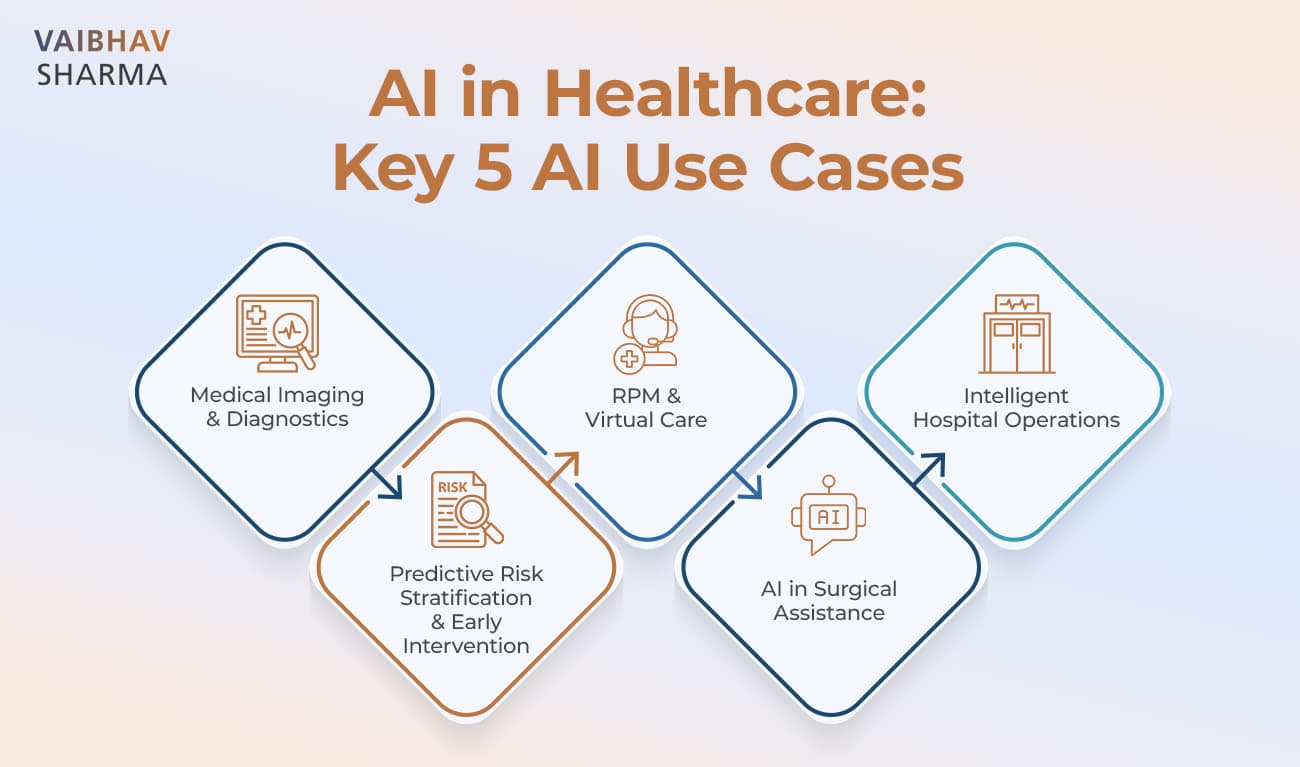
Five Places Smart Healthcare CEOs Deploy AI First
Scheduling that actually works
Healthcare scheduling is broken. Patients call, get put on hold, then play phone tag with staff who manually check provider calendars.
AI scheduling systems handle the entire process: patient requests, provider matching, optimal slot booking. The key difference is they work across all your scheduling systems simultaneously, not just one department at a time.
Auburn Health reduced no-shows by automatically offering alternative slots when patients need to reschedule. Their staff stopped playing scheduling coordinator and started focusing on patient care.
Billing inquiries that don't frustrate everyone
Billing calls consume massive staff time. Patients don't understand charges. Staff explain the same payment options repeatedly. Claims get denied for preventable reasons.
AI systems review clinical documentation and assign proper billing codes before submission. They predict which claims will get denied and why, letting you fix issues upfront. Atrium Health uses this approach to identify patients eligible for financial assistance - processing more applications with the same staff.
Clinical decisions supported by data, not guesswork
Clinicians juggle massive amounts of patient data while trying to make treatment decisions. They need insights, not more data points.
Clinical decision support systems analyze patient information and surface relevant treatment options. The best ones pull insights from medical literature and flag patterns human eyes might miss [43, 44]. This isn't about replacing clinical judgment - it's about giving clinicians better information faster.
Monitoring patients between visits
Most health problems develop between appointments. By the time patients call, symptoms have often worsened.
Remote monitoring systems track vital signs and medication adherence, alerting providers to problems before they escalate. Companies like AiCure use computer vision to confirm patients take medications correctly. Cardiovascular monitoring leads this space, representing 74% of AI remote monitoring implementations.
Triage that gets patients to the right place
Emergency departments see patients who could be treated elsewhere. Primary care sees patients who need specialist referrals. Everyone ends up in the wrong place.
AI triage systems assess symptoms and medical history, then route patients to appropriate care settings. They improve patient flow by directing people to the right level of care from the start. Machine learning models outperform traditional triage approaches, reducing both under-triage and unnecessary escalation.
The pattern I see: successful healthcare organizations start with one high-impact area, prove the business case, then expand. They don't try to implement AI everywhere at once.
Here's What Companies Get Wrong About AI Implementation
Start with the Problem, Not the Solution
Before evaluating any platform, identify where your operations break down. In one health system, executives thought they needed 'better AI' when the real issue was that billing staff spent 60% of their time on manual data entry.
| Focus Area | Wrong Question | Right Question |
|---|---|---|
| Platform Selection | What's the best AI tool? | What specific workflow is broken? |
| Integration | Does it connect to our EHR? | Will our staff actually use this? |
| Compliance | Is it HIPAA compliant? | Can we audit every decision it makes? |
| Success Metrics | What's our ROI? | How will we know if it's working in 30 days? |
The Implementation Framework That Actually Works
Phase 1: Build Internal Champions
Don't outsource AI literacy to consultants. Identify tech-savvy staff who understand both the technology and daily operations. These people become your internal experts, not just users [58, 59].
Phase 2: Governance Before Technology
Set up oversight before you deploy anything. One Fortune 500 health system I know established an AI committee with legal, compliance, IT, and clinical operations. They review every AI decision before it affects patient care [61, 63].
Phase 3: Measure What Matters
Track business outcomes, not AI performance metrics. Days in accounts receivable dropped from 60 to under 40 days. Clean claim rates stabilized at 98%. Patient wait times decreased by measurable amounts [64, 65].
What's Actually Hard About Healthcare AI
The technology works. The challenge is organizational change.
Staff resist systems they don't understand. Compliance teams worry about audit trails. IT departments struggle with integration complexity. These aren't technical problems—they're people problems.
The health systems moving fastest treat AI implementation as change management, not technology deployment. They invest in training, create feedback loops, and acknowledge that adoption takes time.
Most importantly, they keep humans involved in every AI decision that affects patient care. Technology augments human judgment; it doesn't replace it.
The Hard Truth About Patient Experience
Key Takeaways
- AI agents reduce response times by up to 77% and provide zero-wait support for 95% of patient inquiries, eliminating frustrating hold times and improving satisfaction scores.
- Revenue cycle automation eliminates $200-360 billion in healthcare spending through automated coding, proactive denial management, and streamlined payment processing.
- Top AI applications include appointment scheduling, billing inquiries, clinical decision support, remote monitoring, and intelligent patient triage based on symptoms and intent.
- Successful implementation requires selecting HIPAA-compliant platforms, comprehensive staff training, robust governance frameworks, and clear ROI metrics before deployment.
- By 2026, AI will handle 100% of support interactions with 80% resolved autonomously, allowing healthcare staff to focus on complex patient needs while AI manages routine tasks.
AI enhances customer satisfaction by providing immediate assistance, reducing wait times, and enabling personalized interactions. It automates routine tasks, allowing human staff to focus on complex patient needs, resulting in faster response times and more efficient service delivery.
The top applications include appointment scheduling, billing inquiries and payment collection, clinical decision support, remote patient monitoring, and intelligent triage based on patient symptoms and intent. These applications streamline operations and improve patient care.
Effective implementation involves selecting the right AI platform that aligns with organizational needs, providing comprehensive staff training, ensuring compliance and auditability, and establishing clear performance metrics to measure ROI. It's crucial to address specific challenges rather than adopting AI for its own sake.
AI significantly impacts revenue cycles by automating coding and billing processes, reducing claim denials, and streamlining payment collection. It can eliminate billions in healthcare spending through improved efficiency and accuracy in financial operations.
By 2026, AI is expected to handle 100% of support interactions, with 80% resolved autonomously. This will allow healthcare staff to focus on complex patient needs while AI manages routine tasks, leading to improved operational efficiency and patient care quality.
![How AI Agents Increase Revenue & Customer Satisfaction Healthcare [2026 Guide]](/_next/image?url=%2Fassets%2Fimages%2FVaibhav.jpg&w=128&q=75) By Vaibhav Sharma
By Vaibhav Sharma