
Prompt Engineering for Sales Agents: Getting Nuanced Qualification Right
 10 min read
 Dec 12, 2025

The prompt engineering market is growing faster, projected to hit USD 2.06 billion by 2030 with a CAGR of 32.8%. This makes AI a must-have investment for sales teams rather than a luxury. This isn't just another tech trend. Sales teams of all sizes are embracing this technology as the global market expands at a remarkable pace.
The Boston Institute of Analytics found that AI systems with prompt engineering can cut prompt generation time by up to 60%. Generative AI's roots trace back to the 1960s, and today's conversational AI gives sales teams unprecedented capabilities for lead qualification and outreach. The biggest problem lies in a simple truth - your AI output will only be as good as your input. Modern sales professionals need to become skilled at AI prompting to stay competitive in the market.
In this piece, you'll learn to craft effective prompts for sales qualification that help your team work smarter. Your team can automate tasks, generate useful insights, and create better customer interactions. We'll show you practical techniques to boost your sales performance through better AI use.
Why Prompt Engineering Matters for Sales Qualification
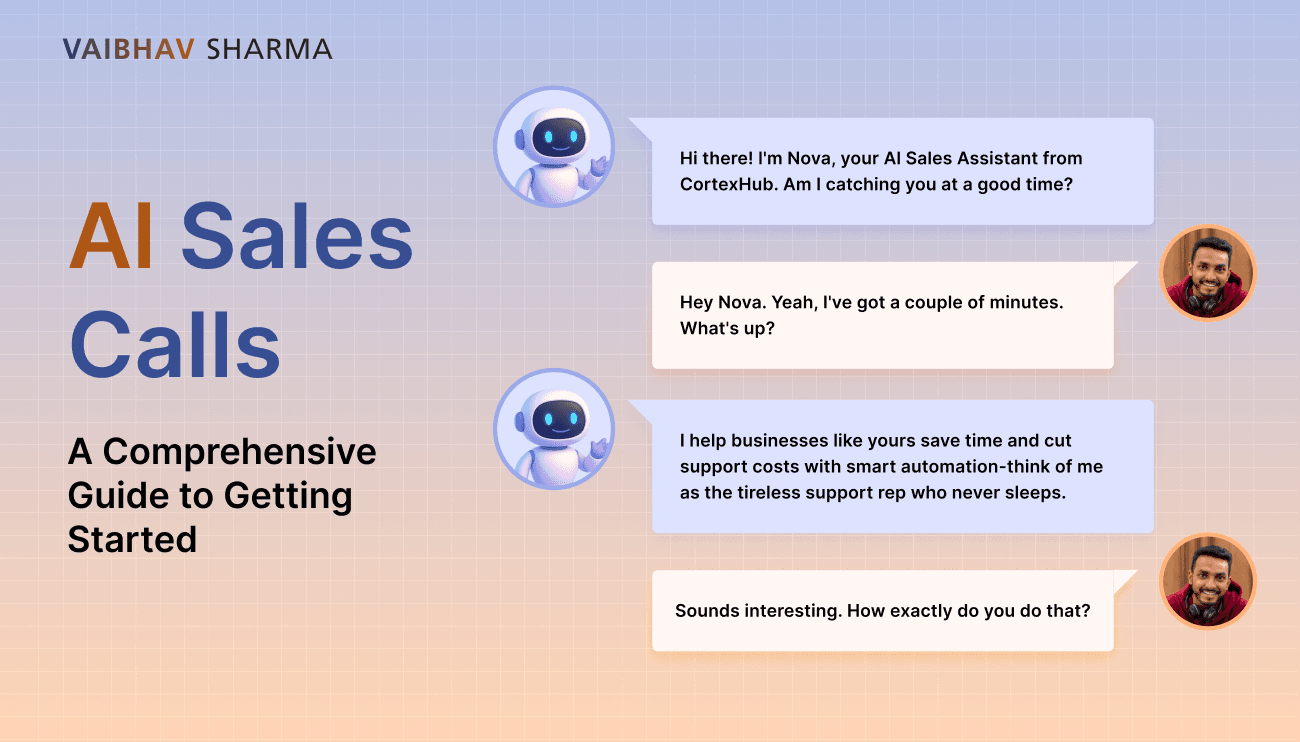
Sales professionals waste valuable time on tasks that aren't selling. Research shows they spend about 71% of their time doing administrative work, research, forecasting, and data entry. The quickest way to fix this productivity drain is through prompt engineering that works.
How prompt quality affects AI sales team performance
The link between prompt quality and AI performance is simple—you get what you give. No reliable sales leader would put team members on projects without detailed briefs. The same goes for AI - we can't expect it to perform well with poor prompts. Well-engineered prompts create strong outputs that turn your AI into a productive team member instead of a frustration source.
Sales teams that use prompt engineering techniques that work see big improvements:
- They cut prompt creation time by up to 60%
- Leads get qualified faster
- Discovery calls work better
- Deals close quicker
How generative AI helps sales teams filter leads better
Generative AI reshapes how sales teams qualify leads. It analyzes huge data sets to find high-quality prospects that match your ideal customer profile. These systems also process behavioral signals, company information, and engagement patterns to spot leads most likely to convert.
Modern AI tools get into:
- Prospect's behaviors and engagement levels
- Historical data patterns
- Company's information and decision-making processes
- Pain points and specific challenges
AI-powered platforms rank leads based on how likely they are to convert. This helps sales teams focus on high-intent prospects and spend less time with unqualified leads.
How conversational AI qualifies leads early on
Conversational AI reshapes early-stage qualification by talking to prospects around the clock. These systems handle the original qualification, book meetings, and keep communication consistent.
AI chatbots work like digital sales reps. They capture and qualify leads quickly by asking preset questions about:
- Budget authority
- Timeline and urgency
- Specific pain points
- Technical requirements
Companies that use automated lead assignment see their close rates go up because the right rep connects with the right buyer quickly. On top of that, conversational AI can assess intent, industry needs, and browsing behaviors to guide prospects to the right representatives. This creates a process that works better.
How to Write Effective Qualification Prompts
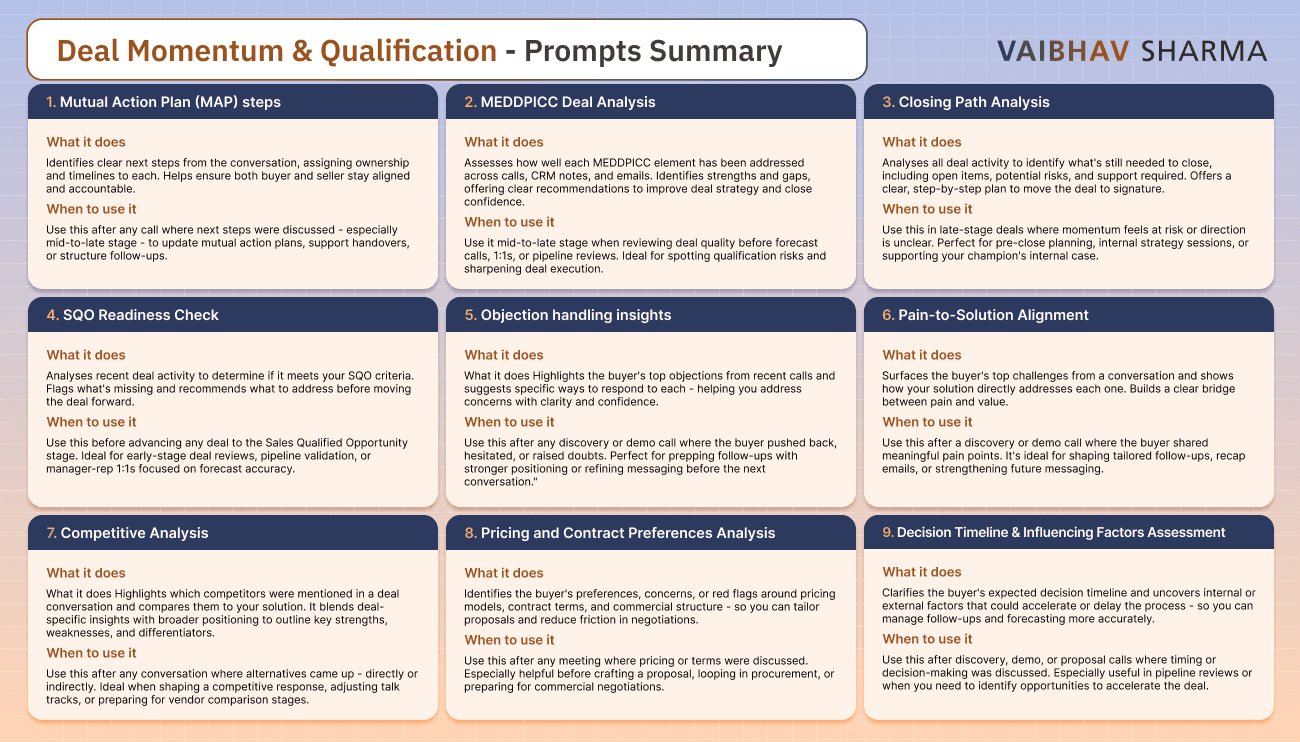
AI-powered sales qualification needs well-crafted prompts that combine smart strategy and careful attention to detail. Your AI process will work better when you create good prompts. Studies show that carefully designed prompts can cut generation time by up to 60%.
Start with the buyer persona and ICP
Success in qualification starts when you know your target audience well. Companies that segment their database by buyer persona are 93% more likely to exceed their lead and revenue goals. Your AI prompts should define:
- Your ideal customer profile (ICP) - companies that benefit most from your product
- The specific buyer persona - individual decision-makers within those companies
- Their professional background and experience
- Goals and objectives they want to achieve
Note that a good ICP focuses on who you serve best rather than who you could potentially serve. This difference leads to more accurate qualification.
Include context like industry, role, and pain points
Good prompts need strong context as their foundation. To cite an instance, rather than asking AI to 'draft an outreach email,' be specific: 'Draft a follow-up email to someone who never replied'. You should also add:
- Prospect's industry and company size
- Their role in the decision-making process
- Specific pain points they're experiencing
- Previous solutions they've tried
AI understands your qualification goals better with this contextual information.
Use clear instructions and expected output format
Your prompts need action verbs like 'generate,' 'summarize,' or 'identify'. You should specify what you need from the AI. Quality prompts for qualification should detail:
- The exact structure of your desired output
- Which qualification criteria to prioritize
- How to handle different response scenarios
Set constraints like word count or tone
Constraints make AI responses more creative and focused. The system becomes more precise and relevant when you set boundaries. Useful constraints include:
- Word count limitations
- Tone specifications (formal, conversational)
- Required elements to include/exclude
- Time period or relevancy parameters
These boundaries help you get targeted qualification insights from your AI sales tools.
Examples of Qualification Prompts for Sales Agents

AI prompts make qualification a precise science in real-life implementation. Sales teams have tested these prompt templates that work in different sales motions and buyer experiences.
Prompt for identifying budget authority
You can tap into budget parameters with prompts that tackle financial decision-making head-on:
Analyze our conversation with [Prospect Name] and identify: - Who has ultimate budget authority for this purchase - Their specific title and role in financial decisions - Current allocated budget amount (if mentioned) - Evidence from conversation supporting these conclusions Format as bullet points with confidence level (High/Medium/Low) for each finding.
Prompt for surfacing timeline and urgency
Research shows that urgent prospects get better resource allocation. Deal prioritization depends heavily on timing:
Review all communications with [Company] and extract: - Implementation timeline expectations - Decision deadline mentioned (if any) - Events driving urgency (fiscal year end, competitor threat) - Consequences of not meeting their timeline Rank urgency on scale 1-10 and explain reasoning.
Prompt for disqualifying based on tech stack
Sales cycles often waste effort when technical compatibility issues surface late:
Compare [Prospect's] current tech stack with our integration requirements: - Identify incompatible systems - Determine if missing prerequisites exist - Calculate implementation complexity (Low/Medium/High) Recommend: Proceed OR Disqualify with specific reason.
Prompt for summarizing call transcripts into qualification notes
AI synthesis helps create practical qualification notes after discovery calls:
Analyze attached call transcript and produce qualification summary with: 1. Primary challenges (max 3) 2. Key stakeholders identified 3. Decision criteria mentioned 4. Technical requirements 5. Next steps agreed upon Limit to one page with headers for each category.
Prompt for generating follow-up questions based on responses
Targeted probing through smart follow-ups deepens qualification:
Based on prospect's response to [Initial Question], generate three follow-up questions that: - Explore decision-making process further - Uncover potential objections not yet mentioned - Clarify their specific timeline constraints Format as numbered list in conversational tone.
How to Improve Prompts Over Time
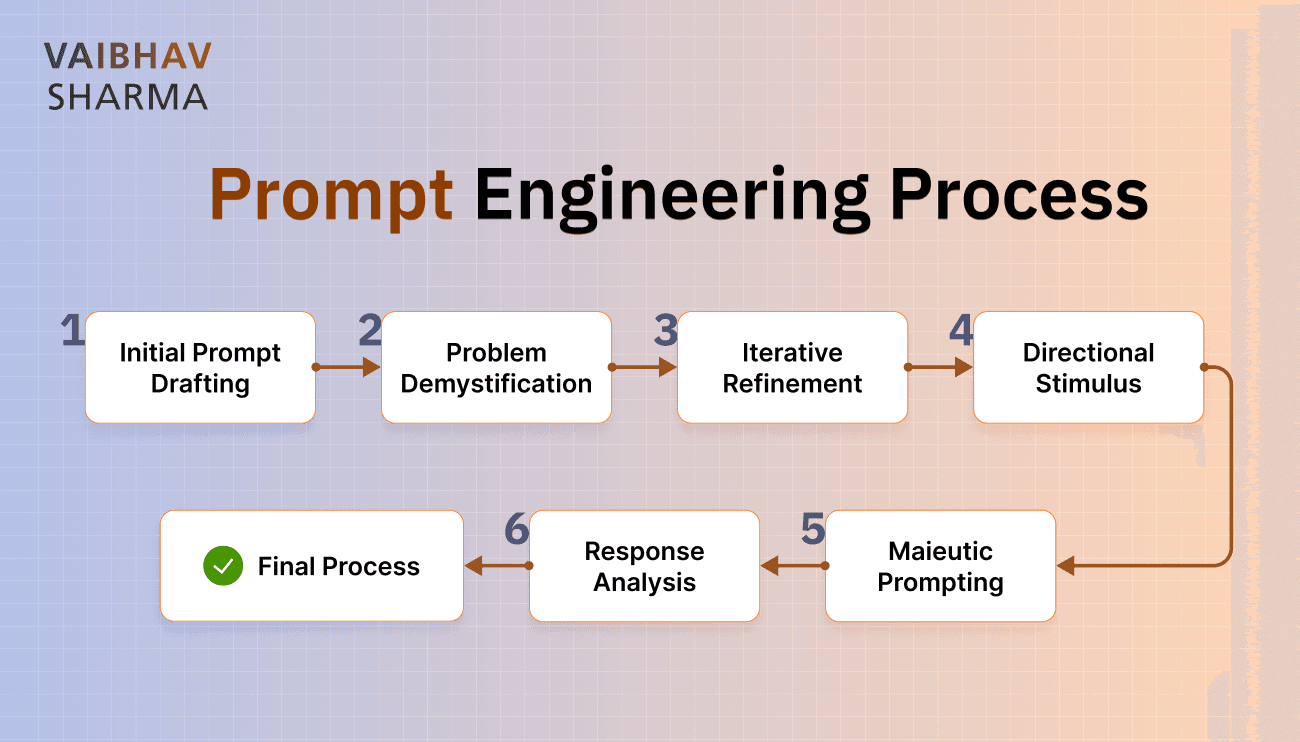
Sales teams can boost their AI prompt effectiveness through constant refinement. Your sales pipeline will see better qualification results when you treat prompt engineering as an evolving process.
Using AI feedback loops to refine prompt structure
Self-improving AI systems become smarter with time through feedback loops. The best way to achieve this involves a three-step cycle:
- Generate the original prompt response
- Request the AI to critique its own output with specific, applicable information
- Tell it to rewrite using only that feedback
You can refine your results through this questioning technique when your first attempt falls short. The feedback must be dimensioned and specific because vague input leads to useless rewrites.
Testing prompt variations across buyer segments
Different prompt styles work better with certain customer segments. Regular testing shows which formats provoke accurate qualification responses from specific buyer personas. Prompt effectiveness changes based on buyer needs that vary by industry and role.
Tracking updates becomes crucial when testing different versions. Label your prompts clearly (e.g., 'EmailTemplate_ColdOutreach_V2') and save old versions to avoid confusion. You can then analyze which versions work best with each segment.
Incorporating sales rep feedback into system prompts
Sales representatives are a great way to get real-life insights about prompt performance. Teams should create dedicated Slack channels where reps can report problems, suggest improvements, and share successful variations. Sales leadership and top performers should meet quarterly to:
- Identify underutilized prompts and determine why they aren't being adopted
- Refine existing prompts based on performance data
- Uncover new use cases where AI-powered prompts add qualification value
Conclusion
Key Takeaways
- Quality prompts drive quality results: Well-engineered prompts can reduce generation time by 60% and dramatically improve lead qualification accuracy for sales teams.
- Context is everything: Include buyer persona, industry details, pain points, and specific role information to help AI understand the 'why' behind qualification efforts.
- Use structured templates: Start with clear action verbs, specify output format, and set constraints like word count to get precise, actionable qualification insights.
- Implement continuous improvement: Create feedback loops, test prompt variations across buyer segments, and incorporate sales rep insights to refine your AI system over time.
- Focus on high-impact areas: Target prompts for budget authority, timeline urgency, technical compatibility, and call transcript summaries to address the most critical qualification challenges.
FAQs
There are four main levels of prompt engineering: Tourist (basic queries), Template User (structured prompts), Engineer (advanced techniques), and Architect (system building). Each level represents increasing sophistication in interacting with AI models.
To improve, practice crafting clear instructions, provide context, use role prompting, set constraints, and test different prompt variations. Regularly experiment in AI playgrounds, incorporate feedback, and stay updated on new techniques.
An effective qualification prompt includes clear buyer persona details, specific context (industry, role, pain points), precise instructions, and desired output format. It should also incorporate constraints like word count or tone to guide the AI's response.
AI can analyze large datasets to identify high-quality prospects, process behavioral signals and engagement patterns, rank leads based on conversion likelihood, and handle initial qualification through conversational AI, allowing sales teams to focus on high-intent prospects.
Advanced techniques include using AI feedback loops to refine prompts, implementing few-shot learning with examples, creating multi-step prompts for complex tasks, and designing prompts for specific use cases like identifying budget authority or summarizing call transcripts.
 By Vaibhav Sharma